Niacinamide, ranked by concentration that actually works.
Niacinamide (vitamin B3) is the most-evidenced brightening active for the price — but the concentration (2% vs 5% vs 10% vs 20%), the format (serum vs moisturiser), and the co-actives (zinc, peptides, HA) make a real difference in how your skin responds. This page ranks 11 popular niacinamide products on irritation, clinical evidence, concentration, and price per ml.
Last updated: August 23, 2026 · Sources: Draelos 2006 (J Cosmet Dermatol), Bissett 2009, Rolfe 2014, Cosmetic Ingredient Review 2019
At a glance
Best budget entry
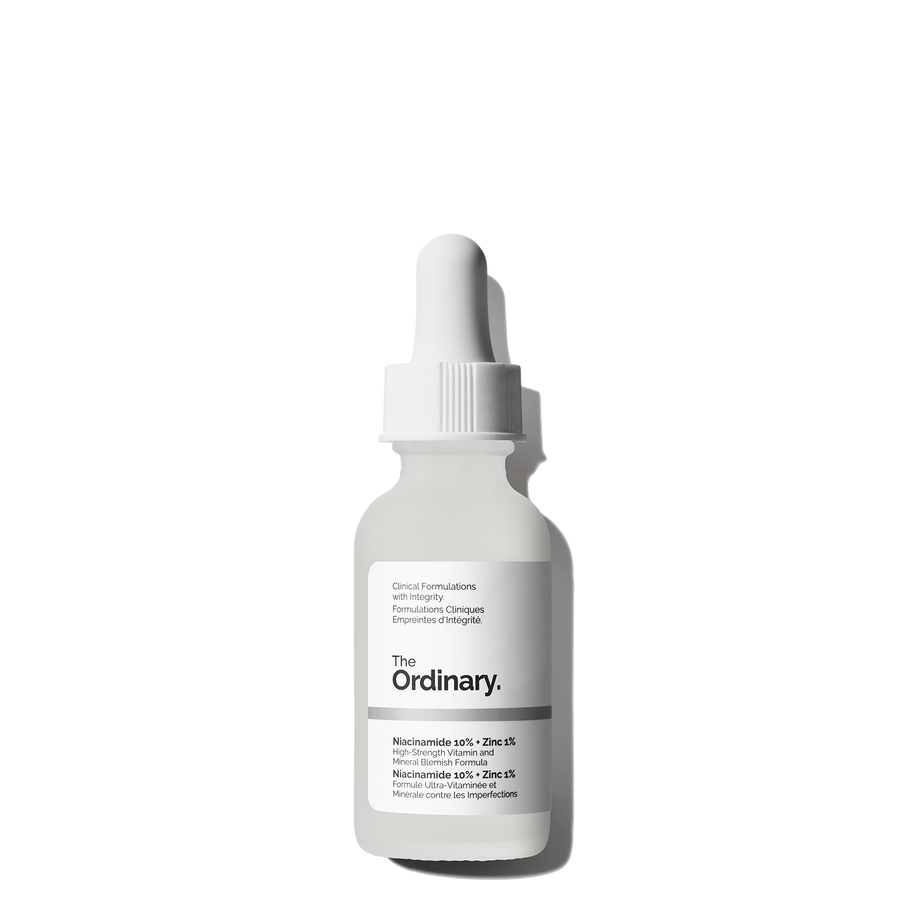
The Ordinary Niacinamide 10% + Zinc 1%
~$6.30 USD, 30ml. The most-bought niacinamide product in the world. 10% niacinamide is the modern sweet spot for hyperpigmentation (Draelos 2006).
Most evidence per dollar
The Ordinary Niacinamide 10% + Zinc 1%
~$6.30 USD. The 10% + zinc combination is the most-cited over-the-counter niacinamide format in dermatology literature since Draelos 2006.
Best for sensitive skin
The Ordinary Niacinamide 5% + HA
~$8.10 USD. 5% niacinamide + low-MW HA, well-tolerated on first use. The right starting point for sensitive or first-time niacinamide users.
Product comparison
Compare 11 popular niacinamide products on format, concentration, irritation, evidence, and price per ml. Irritation 5/5 = lowest irritation / best tolerability. Evidence 5/5 = strongest published clinical trial base.
Irritation 1/5 = most irritating (20% niacinamide in denatured alcohol base), 5/5 = least irritating (2–5% in humectant base). Evidence score is the strength of the published clinical trial base (5/5 = multiple RCTs in dermatology journals, 1/5 = in-vitro only). Niacinamide 10% has the strongest evidence for hyperpigmentation and sebum regulation (Draelos 2006, Bissett 2009, Rolfe 2014). Lower concentrations (2–5%) show barrier-support effects; higher concentrations (10%+) are needed for measurable brightening.
Pure niacinamide at 2–10% in a humectant base. The cleanest delivery form. The 10% concentration is the modern sweet spot — strong enough to measurably fade post-acne marks in 8 weeks, gentle enough to be tolerable for most skin types. Draelos 2006 (J Cosmet Dermatol) is the most-cited clinical trial, followed by Bissett 2009 (Clin Dermatol) and Rolfe 2014.
Best for: hyperpigmentation, post-acne marks, sebum regulation, barrier support. Use once or twice daily, AM and/or PM. The 5% entry point suits sensitive skin; the 10% level is the evidence-backed standard.
2
Niacinamide + zinc
Irritation: 3/5 · Evidence: 4/5
Niacinamide paired with zinc PCA (typically 1%). Zinc adds sebum regulation and mild antibacterial activity, which is why this combo is the gold-standard pick for oily + acne-prone skin. The Ordinary 10% + Zinc 1% is the most-bought example. The combination is more drying than standalone niacinamide — sensitive-skin users should patch-test first.
Best for: oily skin, acne-prone skin, anyone who wants sebum regulation alongside brightening. Avoid if you have dry or sensitive skin.
3
Niacinamide + peptide
Irritation: 4/5 · Evidence: 3/5
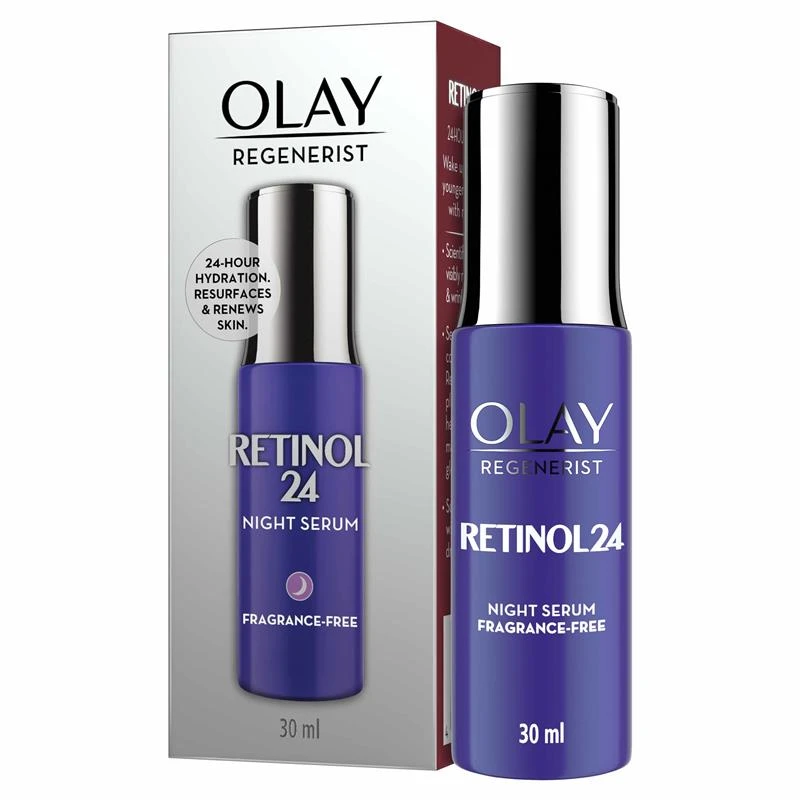
Niacinamide paired with a peptide complex (typically palmitoyl pentapeptide, matrixyl, or copper peptides). Peptides signal collagen synthesis; niacinamide supports the barrier and brightens. The combo is well-tolerated and shows up in mass-market brightening lines (Olay Peptide 24, Medik8 Clarity Peptides). Less direct RCT evidence for the combination than for standalone niacinamide.
Best for: mature skin, anyone wanting brightening + anti-aging in one serum. Slightly more expensive than standalone niacinamide.
4
Niacinamide + retinol
Irritation: 2–3/5 · Evidence: 4/5
Niacinamide paired with retinol or retinal. Niacinamide buffers retinol irritation (Draelos 2006), and the brightening effect of niacinamide complements the cell-turnover effect of retinol. The combo is well-tolerated even by first-time retinoid users. Note: this is a multi-active product — for detailed retinol comparisons, see our retinol comparison.
Best for: anyone already using a retinol and wanting extra brightening support. Apply in the PM, after retinol.
5
Niacinamide + hyaluronic acid Gentlest
Irritation: 5/5 · Evidence: 3/5
Niacinamide paired with low- or high-molecular-weight hyaluronic acid. The HA hydrates the barrier; the niacinamide supports the barrier. The gentlest niacinamide format — recommended for sensitive or first-time users. Examples: The Ordinary Niacinamide 5% + HA, Drunk Elephant B-Hydra. The trade-off: niacinamide concentration is typically 5% (vs 10% in standalone serums), so brightening is slower.
Best for: sensitive skin, first-time niacinamide users, anyone who can't tolerate the 10% standalone serums. Best as a barrier-support product, not a hyperpigmentation fix.
6
Niacinamide moisturizer
Irritation: 5/5 · Evidence: 2/5 (as a category)
Niacinamide formulated into a moisturiser rather than a serum. Concentration is typically 2–5% (lower than serums) but the cumulative daily dose can be similar. Examples: CeraVe PM Facial Moisturising Lotion, Olay Regenerist Micro-Sculpting Cream. The advantage: the daily routine is simplified. The disadvantage: lower concentrations mean slower visible brightening.
Best for: minimal routines, anyone who doesn't want a separate serum step. Realistic expectations required for hyperpigmentation.
How to start using niacinamide (and not overdo it)
Unlike retinol, niacinamide doesn't have a painful "retinization" period. But the concentration and frequency matter. Here's the protocol that maximises results without irritation:
Start at 5% or 10%, not 20%. The evidence base for visible brightening starts at 10% (Draelos 2006). Higher concentrations (15–20%) appear in some "professional" lines but the additional benefit is marginal while the irritation cost rises. Stick with 5% for sensitive skin, 10% for everyone else.
Use once daily for the first 2 weeks. Either AM or PM. Most people tolerate niacinamide in the morning, layered under SPF. If you want to use it twice daily, start once daily and add a second application in week 3.
Apply to clean, dry skin. Wait 60 seconds after cleansing. A few drops for the entire face and neck. More is not better — excess niacinamide just sits on the skin and can flush.
Layer with other actives safely. Niacinamide is one of the few actives that stacks well with everything: vitamin C, retinol, AHAs, BHAs, benzoyl peroxide. The only caveat is the long-debunked LAA + niacinamide "flush" myth — a 2008 study showed modest flush in some users at very high simultaneous concentrations. In practice, layer with 5–10 minutes between, or use them at separate times of day.
For 10% + zinc formulations, watch for dryness. Zinc PCA is mildly astringent. If you feel tightness after application, follow with a moisturiser. The combo is drying on already-dry skin.
Expect 4–8 weeks for visible brightening. Niacinamide is not a fast-acting active. Hyperpigmentation, post-acne marks, and pore appearance start to show measurable change around week 8. Sebum regulation is faster — usually noticeable in 2–4 weeks.
Don't stop after 4 weeks. The most common reason "niacinamide didn't work" is quitting before week 8. The evidence base is for 8–12 week use, not 4-week trials.
Top picks by use case
Best budget entry
The Ordinary Niacinamide 10% + Zinc 1%
~$6.30 USD, 30ml. The most-bought niacinamide product in the world. 10% niacinamide + 1% zinc PCA. Read the full niacinamide guide →
Most evidence per dollar
The Ordinary Niacinamide 10% + Zinc 1%
~$6.30 USD. The 10% + zinc combination is the most-cited over-the-counter niacinamide format in dermatology literature since Draelos 2006.
Best for sensitive skin
The Ordinary Niacinamide 5% + HA
~$8.10 USD. 5% niacinamide + low-molecular-weight HA, well-tolerated on first use. The right starting point for sensitive or first-time niacinamide users.
Best dermatologist-grade
La Roche-Posay Mela B3 Serum
~$50 USD. 10% niacinamide + Melasyl (LRP's proprietary tyrosinase inhibitor). The right starting point if you want dermatologist validation. Sold in TH Watsons.
Best for oily / acne-prone skin
The Ordinary Niacinamide 10% + Zinc 1%
~$6.30 USD. Zinc PCA adds sebum regulation, which is why this serum is the go-to for oily + acne-prone skin. Slight tacky feel on application.
Best premium / iHerb
Paula's Choice 10% Niacinamide Booster
~$42 USD. 10% niacinamide + panthenol + allantoin. Order via iHerb for TH shipping. Designed to be added to any serum or moisturiser.
Best for mature skin
Olay Vitamin C + Peptide 24 Brightening Serum
~$22 USD. Niacinamide + peptides + SAP. Brightening plus anti-aging. Sold at TH Watsons, Boots, AU Chemist Warehouse.
Best hydrating combo (dry skin)
Drunk Elephant B-Hydra Intensive Hydration Serum
~$52 USD. 5% niacinamide + low-MW HA + panthenol. Vegan, fragrance-free. Sold at Sephora AU and iHerb for TH shipping.
Best premium gold-standard (peptides + niacinamide)
Medik8 Clarity Peptides
~$95 USD. 10% niacinamide + crystalide + tranexamic acid. UK professional-grade. Sold at Adore Beauty and iHerb for TH shipping.
Neutrogena Bright Boost Vitamin C + Niacinamide Serum
~$16 USD. Niacinamide + ascorbyl glucoside. Sold at TH Watsons, Boots, AU Chemist Warehouse. The right mass-market pick.
Side effects & drug interactions
Niacinamide is among the gentlest active skincare ingredients. The Cosmetic Ingredient Review (CIR) Expert Panel in 2019 concluded that niacinamide is "safe as currently used in cosmetics" at concentrations up to 20%. Most users experience no irritation at all.
Common (mild) side effects
Mild flushing at high concentrations (15–20%) — typically transient
Dryness or tightness, especially with 10% + zinc formulas
Slight tacky feel on application (formulation-dependent)
Rare allergic contact dermatitis (~0.1% in published case series)
Drug interactions: very rare topically; oral niacinamide can interact with cholesterol medications and anticonvulsants
Stop use and see a dermatologist if
Severe burning, swelling, or crusting (allergic contact dermatitis)
Persistent flushing that does not resolve within 30 minutes of application
Hives, rash, or widespread redness
Concurrent use of high-dose oral niacin supplements (theoretical additive flushing risk)
Active eczema, rosacea flare, or sunburn on the application area
Pregnancy or breastfeeding — topical niacinamide is considered safe but data is limited
References & sources
Draelos ZD, et al. (2006). The effect of 2% niacinamide on facial sebum production. Journal of Cosmetic Dermatology 5(2):152-156. (The foundational niacinamide + sebum study.)
Bissett DL, et al. (2009). Topical niacinamide reduces yellowing, wrinkling, red blotchiness, and hyperpigmented spots in aging facial skin. International Journal of Cosmetic Science 31(1):47-54. PMID: 19152527
Rolfe HM (2014). A review of nicotinamide: treatment of skin diseases and potential side effects. Journal of Cosmetic Dermatology 13(4):324-328. PMID: 25399625
Cosmetic Ingredient Review Expert Panel (2019). Amended Safety Assessment of Niacinamide. International Journal of Toxicology 38(1_suppl):5S-25S. (CIR safety re-review at concentrations up to 20% — found safe.)
Navarrete-Solís J, et al. (2011). A double-blind, randomized clinical trial of niacinamide 4% versus hydroquinone 4% in the treatment of melasma. Journal of Dermatological Treatment 22(6):371-376. PMID: 21208046 (4% niacinamide comparable to 4% hydroquinone for melasma over 8 weeks, with fewer side effects.)
American Academy of Dermatology — Niacinamide and your skin. aad.org
Examine.com — Niacinamide research review. examine.com
The Ordinary, CeraVe AU, Olay AU, Neutrogena AU, La Roche-Posay AU, Paula's Choice, RoC AU, Medik8 AU, Bioderma TH, Drunk Elephant, INGU TH — product pages and price snapshots cited per row above (date column).
Trusted brands we rate
These 10 brands are featured on every vitfacts.com comparison page. We track them
for ingredient transparency, third-party testing, and Thailand availability.
A clinical-active cult brand built around single-molecule formulas at price points that disrupted the skincare industry. Sold at Sephora, Chemist Warehouse, and most Thai beauty retailers.
A dermatologist-developed US brand built around ceramides + MVE controlled-release technology. Sold at Chemist Warehouse, Watsons, Boots, and most major pharmacies worldwide.
A 70-year-old P&G mass-market skincare brand with clinical retinol offerings in the Regenerist line. Widely stocked at supermarkets, Watsons, Boots, and Chemist Warehouse.
A dermatologist-recommended US brand with a deep retinol catalog (Rapid Wrinkle Repair, Stubborn Texture). One of the most-searched retinol brands on both AU and TH retail sites.
A French pharmacy-grade dermocosmetics brand endorsed by dermatologists worldwide. Their Retinol B3 serum and Redermic lines are bestsellers in both Australian and Thai pharmacies.
A research-driven US skincare brand founded by chemist Paula Begoun. The Clinical 1% Retinol Treatment is one of the most-cited retinol products in dermatology literature. Sold via own site, iHerb, and Sephora.
A US skincare brand that has specialised in retinol since 1995 — one of the first mass-market retinol lines. The Retinol Correxion line is a household name in AU and TH pharmacies.
A UK professional-grade skincare brand built around CSA philosophy (Vitamin C + Sunscreen + Vitamin A). Their Crystal Retinal series is one of the most stable retinaldehyde products on the market.
A French dermo-cosmetic brand under the NAOS group, widely sold at Watsons, Boots, and Thai independent pharmacies. Recently expanded retinol line with the Retinol+C10 serum.
A US premium "biocompatible" skincare brand owned by Shiseido. The A-Passioni 1% Retinol Cream is widely considered the gold standard in the premium retinol segment. Sold at Sephora, Mecca, and iHerb.
Since Thailand (founded year unverified — about/story page does not state a year)
MID
A Thai clinical-skincare brand (อิงกุ) built around ingredient transparency and research-led formulations. Operates two product lines: topical skincare (Green Tea Biome Balance cleansers/creams, Green Tea Retinol Serum Shot, Vitamin C AOX Glowing Serum, broad-spectrum sunscreens) and an oral INU range (astadaily / astanext Astaxanthin + Vitamin E antioxidant supplements).
Why these 10? See the VitFacts editorial policy page (forthcoming) for the criteria — minimum
10 years of documented safety record, public certificate-of-analysis policy, and verifiable
Thailand distribution.